

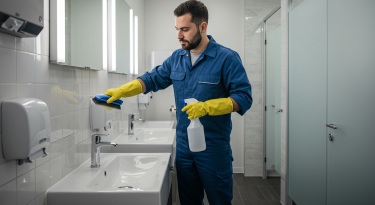
We provide specialized restroom cleaning and biohazard waste prevention for medical facilities. Our medical facility cleaners in Washington, NC, deliver hospital-grade disinfection with EPA-compliant solutions and strict waste handling protocols.
J Daniels Cleaning offers a range of services, including commercial cleaning services designed to reduce infection risk and ensure verified sanitation for your healthcare environment.
Dirty Mop Water: Contamination Risk Assessment
Turbid mop water indicates biofilm accumulation and microbial proliferation. Three diagnostic indicators signal compromised sanitation protocols:
-
Cloudy residue — suspended particulates and bacterial colonies remain post-application
-
Persistent odor — volatile organic compounds from anaerobic decomposition
-
Streaked surfaces — residual contamination defeating pathogen removal objectives
In healthcare environments, degraded cleaning solutions amplify cross-contamination vectors. Contaminated mop water retains gram-negative bacteria, viruses, and fungal spores rather than eliminating them.
Technical intervention: Implement frequent water replacement cycles, validated disinfectant concentrations, and microfiber technology to reduce pathogen transfer coefficients. Additionally, regular sanitization of surfaces is crucial for maintaining a sterile environment.
Hospital-grade protocols require documented solution changes and contact time compliance to achieve log-reduction standards necessary for infection prevention.
Medical Facility Cleaning Protocols Highlight
Microorganism proliferation in mop reservoirs necessitates validated sanitization protocols. Evidence-based cleaning methodologies target high-touch surfaces, biofilm formation sites, and patient care environments using EPA-registered disinfectants with documented efficacy against nosocomial pathogens.
Tiered Cleaning Specifications
Facility classification determines chemical selection, dwell times, and application frequency. Sterile environments require validated cleaning validation studies; general patient areas require routine pathogen reduction protocols; administrative spaces require baseline sanitation.
Inventory Management Systems
Supply chain optimization prevents stockouts of critical disinfectants while tracking chemical compatibility, expiration protocols, and staff utilization metrics. Real-time monitoring ensures resource allocation aligns with facility infection prevention objectives.
Clinical Outcomes Integration
Cleaning protocols directly correlate with healthcare-associated infection rates. Standardized procedures, staff competency assessment, and environmental monitoring validate protocol effectiveness against infection control benchmarks.
Biohazard Waste Management Protocol
Effective biohazard waste containment requires three interconnected processes:
Segregation and Classification
It is necessary to classify pathogenic materials according to the type of infectious agent and containment level. Sharps, cultures, and anatomical waste follow distinct segregation pathways to prevent cross-contamination.
Transportation Infrastructure
Enclosed, rigid containers with biohazard symbols prevent aerosolization during movement. Routes minimize staff exposure and comply with OSHA bloodborne pathogen standards. Secondary containment prevents spillage events.
Treatment and Disposal
Autoclave sterilization or incineration reduces microbial viability to non-infectious levels. Chain-of-custody documentation enables regulatory compliance tracking and epidemiological investigations when required.
Get Your Free Medical Facility Cleaners Estimate Today!
J Daniels Cleaning provides hospital-grade disinfection protocols for medical environments in Washington and Goldsboro, NC.
Services include pathogen remediation, restroom inventory management, and EPA-compliant green cleaning solutions.
Technical Specifications
-
Microorganism elimination through validated disinfection protocols
-
Restroom supply chain management and sanitation compliance
-
Upholstery decontamination using medical-grade processes
-
24-Hour service availability for clinical facility requirements
Service Integration
Customized janitorial programs address infection prevention, operational efficiency, and budget constraints specific to healthcare settings.
Contact & Assessment
Phone: 252-327-5821
Email: jrdaniels1961@gmail.com
Web contact form: Service consultation
Washington, NC Attractions: Historic and Natural Assets
Washington, NC encompasses three primary attraction categories:
Riverfront Infrastructure
The Pamlico River waterfront provides access points for recreational navigation and ecological observation.
Trail networks facilitate pedestrian movement through riparian zones.
Downtown Commercial District
Historic preservation efforts maintain 18th-century architectural stock.
Retail establishments occupy restored structures, supporting local economic activity through direct commerce.
Food Service Establishments
Regional cuisine establishments source local agricultural products.
Dining venues function as community gathering points with documented historical significance.
Each attraction category addresses specific visitor objectives: environmental exploration, cultural heritage documentation, and culinary experience.
Get Started
Fill out form below